
A typical UAE trading company might buy in US dollars, sell in dirhams and riyals, hold stock in a Jebel Ali free zone warehouse and a mainland showroom, invoice in English and Arabic, and report VAT and corporate tax to the Federal Tax Authority. Many off-the-shelf systems can handle parts of that. Few handle all of it the way the business actually works.
This guide is for owners, general managers and finance managers at trading, retail, distribution and logistics companies in Dubai, Sharjah, Ajman, Abu Dhabi and the wider UAE. It explains what a custom ERP should cover and how to roll it out safely.
Common Problems in UAE Trading Businesses
- Stock spread across free zone and mainland locations, tracked in different tools.
- Pricing in several currencies with exchange rates updated by hand.
- Sales teams quoting from spreadsheets and WhatsApp, with no link to stock.
- VAT invoices prepared manually and checked by finance at month end.
- Separate systems for each legal entity, consolidated in Excel.
What a UAE-Ready ERP Should Cover
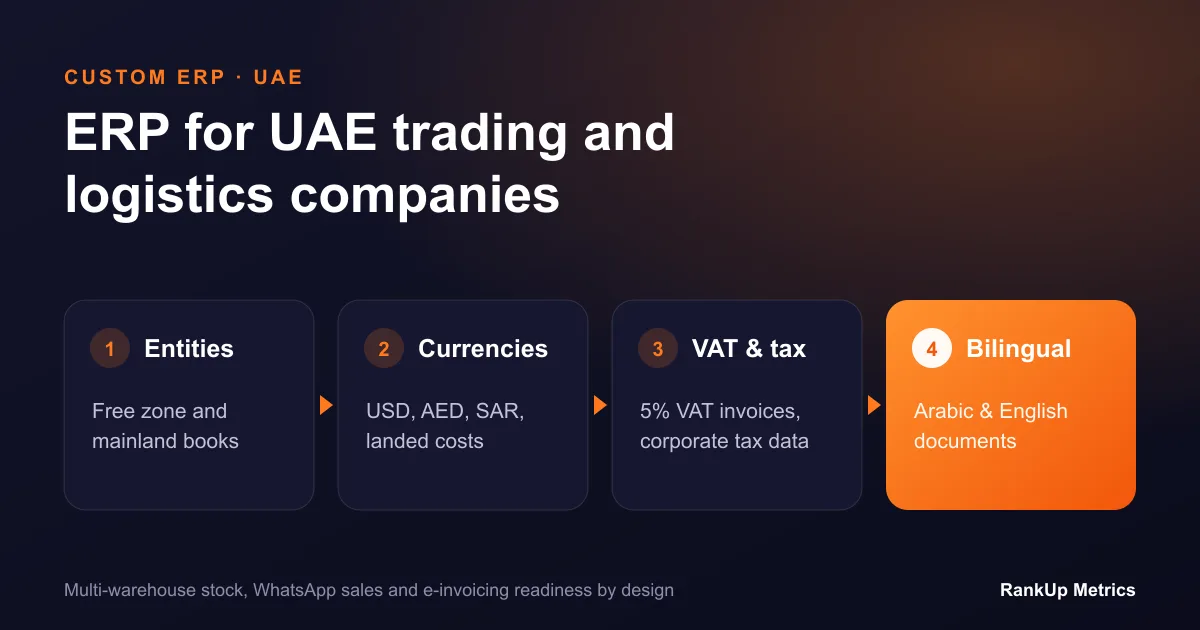
Multi-entity and multi-location. Separate legal entities, such as a free zone company and a mainland company, with their own books, plus consolidated reporting. Stock by warehouse, showroom and transit location.
Multi-currency. Purchases in USD, EUR or CNY, sales in AED, SAR and other GCC currencies, with exchange rates, landed costs and margin calculated correctly.
UAE VAT. Tax invoices with the required details, standard-rated, zero-rated and exempt supplies handled correctly, reverse charge on imports, and VAT return data ready for review. The UAE standard VAT rate is 5%.
Corporate tax readiness. UAE corporate tax applies to financial years starting on or after 1 June 2023. Clean, entity-level financial data and clear separation of free zone and mainland activity make compliance and advice from your tax adviser far easier.
E-invoicing readiness. The UAE is introducing mandatory e-invoicing in phases. A custom ERP can be designed with structured invoice data so connecting to an accredited service provider later is straightforward. Check current Ministry of Finance and FTA timelines with your adviser.
Arabic and English. Bilingual product names, customer names and documents, with right-to-left layouts where needed.
Trade documents. Proforma invoices, packing lists, certificates of origin and HS codes stored against products and shipments.
Inventory Features That Make the Biggest Difference
- real-time stock by location, with reserved and available quantities;
- barcode or QR scanning for receiving, picking and stock counts;
- batch and expiry tracking for food, cosmetics and pharmaceuticals;
- landed cost calculation including freight, duty and handling;
- reorder suggestions based on sales history and supplier lead times, including long sea-freight lead times;
- transfer tracking between warehouses and free zone to mainland movements.
Sales and Customer Workflows
Most UAE sales still start on WhatsApp. A custom ERP can capture those enquiries, check live stock and price, create quotes and convert them to orders without re-typing. Combined with AI, it can also draft replies in Arabic or English for staff to approve. Read more in our guide to AI integration with CRM and ERP.
For trade customers, a B2B client portal lets buyers check stock, reorder and download invoices themselves.
A Phased Rollout
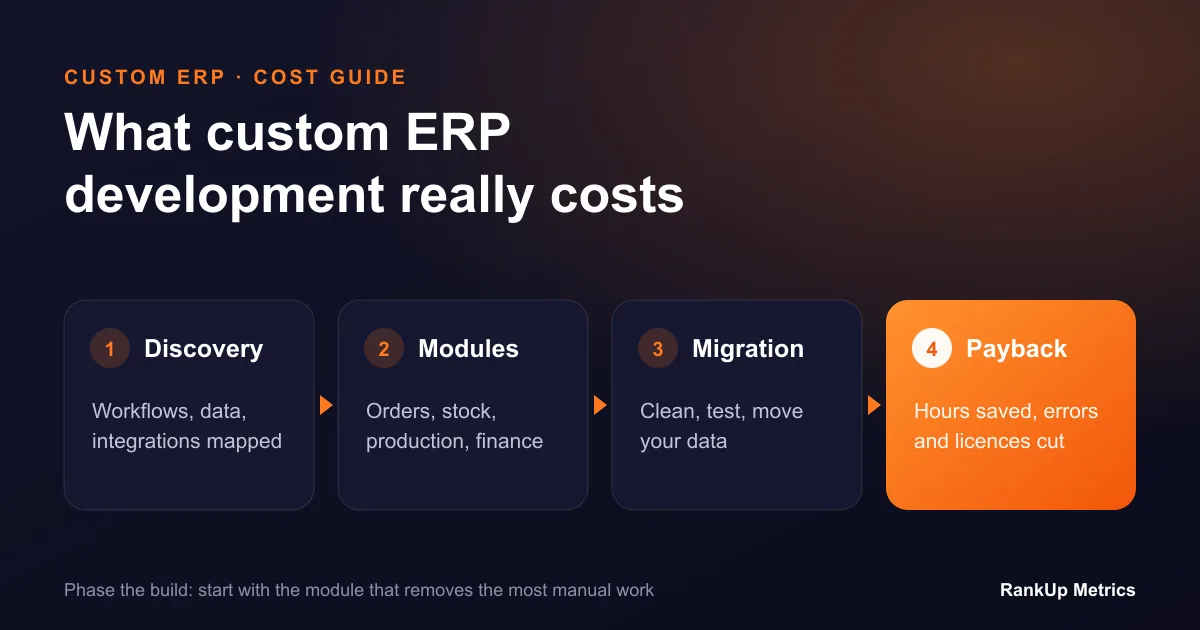
- Discovery (3 to 4 weeks): map entities, locations, currencies, documents and current tools.
- Phase 1: inventory, purchasing and sales orders for one entity, with accounting integration.
- Phase 2: additional entities and warehouses, consolidation and multi-currency reporting.
- Phase 3: portals, WhatsApp integration, AI assistance and advanced analytics.
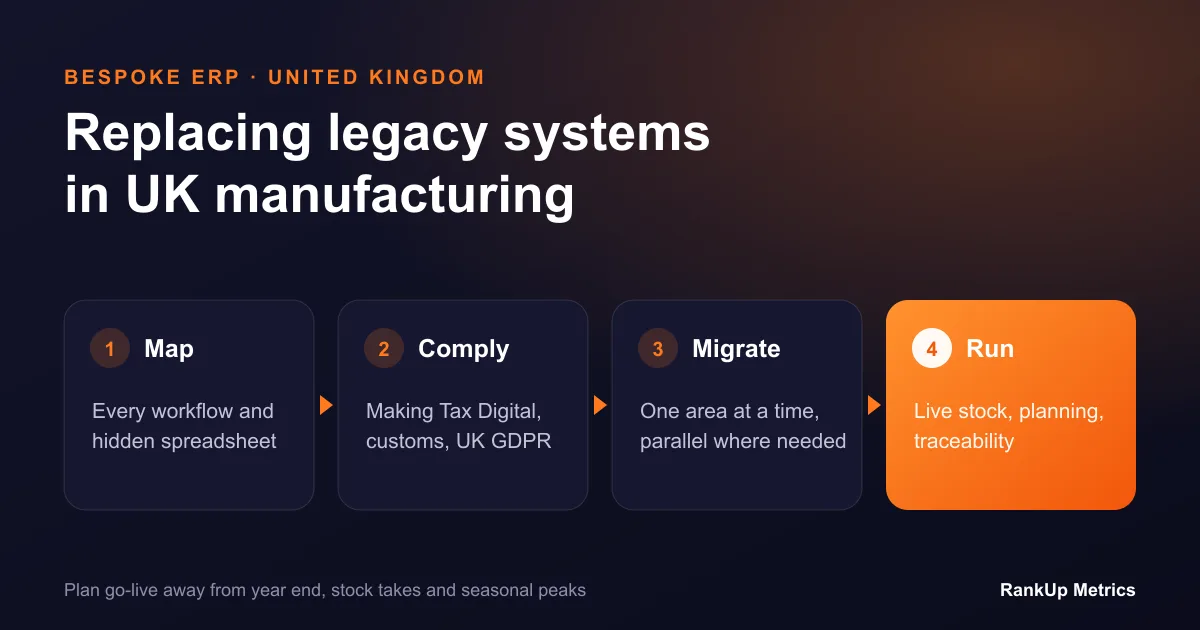
Plan go-live away from peak trading periods and year end, and run stock counts before and after migration to confirm accuracy.
Next Steps
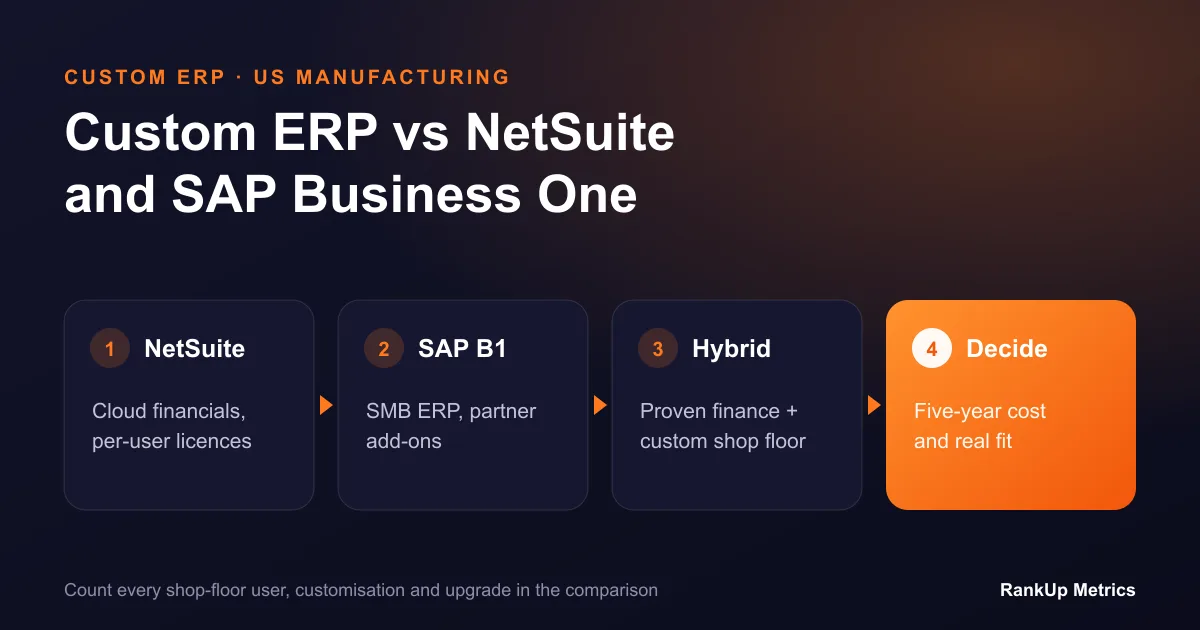
Our custom ERP development team builds systems for UAE and GCC trading, retail and logistics companies, with Arabic and English support. We also work with businesses through our Ajman web development team. For the decision itself, compare custom ERP vs off-the-shelf ERP and see the cost drivers by module.