In B2B Google Ads, the easiest way to lower cost per lead is to accept worse leads. Broaden match types, add a free download, lower the form friction, and the CPA in the dashboard falls. Then sales complains that none of the leads are real.
The goal is not a cheaper lead. It is a cheaper qualified lead, and ultimately a cheaper customer. This guide shows how to reduce CPA in B2B Google Ads without losing lead quality.
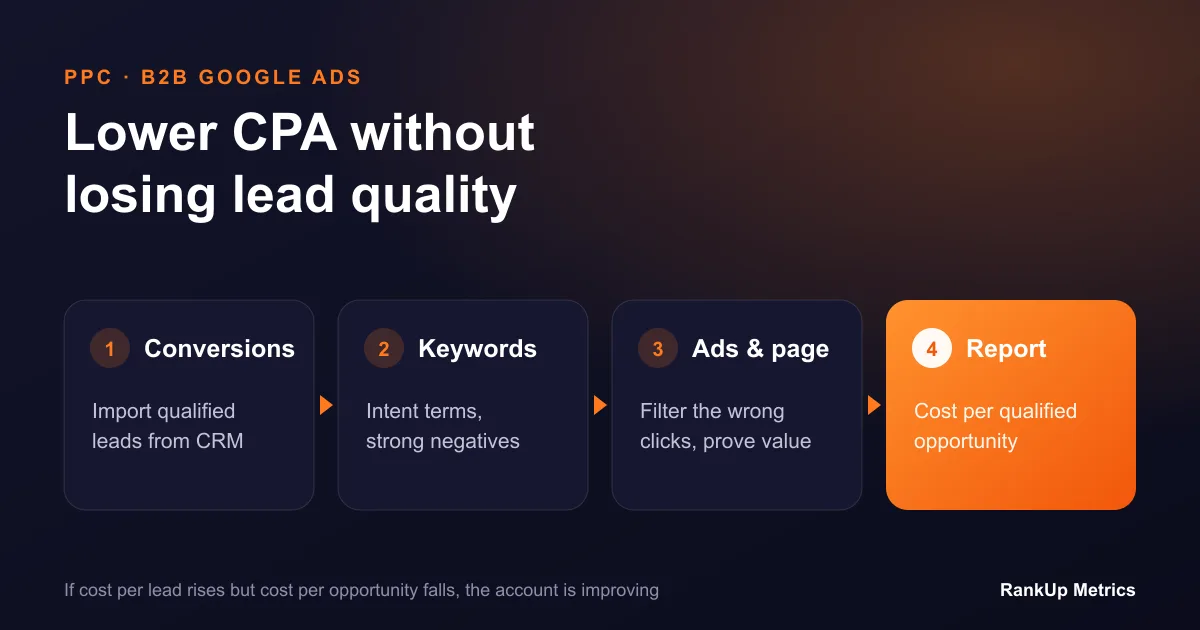
Step 1: Redefine What a Conversion Is
If Google Ads optimises for form fills, it will find people who fill in forms, including students, job seekers and competitors. Teach it what a good lead looks like instead:
- Pass the Google click ID (GCLID) or use enhanced conversions for leads to connect each form or call to your CRM.
- Import offline conversions when a lead becomes qualified, becomes an opportunity, and closes.
- Optimise bidding toward qualified leads once you have enough volume, and keep form fills as a secondary conversion.
- Assign values to each stage so value-based bidding can prioritise the leads worth most.
This one change usually has more impact on real CPA than any keyword or ad copy work.
Step 2: Tighten Keyword Intent
- Focus on keywords that include service, solution, vendor or pricing terms, such as "ERP development company" or "managed IT services for law firms".
- Use broad match only with strong conversion data and good offline conversion signals; otherwise phrase and exact match keep spend focused.
- Review the search terms report weekly at first, then fortnightly.
Build negative keyword lists for jobs, careers, salary, training, courses, free, template, definition, examples, DIY and competitor brand terms you do not want. Apply them at account level so new campaigns start clean.
Step 3: Use Audiences and Targeting Wisely
- Exclude existing customers and employees using customer lists where policy allows.
- Set locations to where you can actually sell, using "presence" rather than "presence or interest".
- Schedule ads for the hours when your team can respond quickly, if fast response matters to conversion.
- Layer in-market and custom segments for observation first, then adjust bids based on qualified-lead data.
Step 4: Write Ads That Filter, Not Just Attract
B2B ads should help the wrong people decide not to click:
- name the buyer: "For manufacturers with 50+ staff";
- mention the type of engagement: "Custom ERP projects, phased delivery";
- where suitable, signal price level: "Retainers from £549/month";
- use sitelinks to case studies, pricing and process pages.
A slightly lower click-through rate from the right people beats a high CTR from the wrong ones.
Step 5: Fix the Landing Page
Most B2B accounts lose more money on the landing page than in the auction. A strong page:
- matches the ad's promise and keyword exactly;
- explains who it is for, what is delivered and how the process works;
- shows proof: clients, results, reviews, certifications;
- uses a short form with one or two qualifying fields, such as company size or project type;
- offers a calendar booking for ready buyers;
- loads fast on mobile.
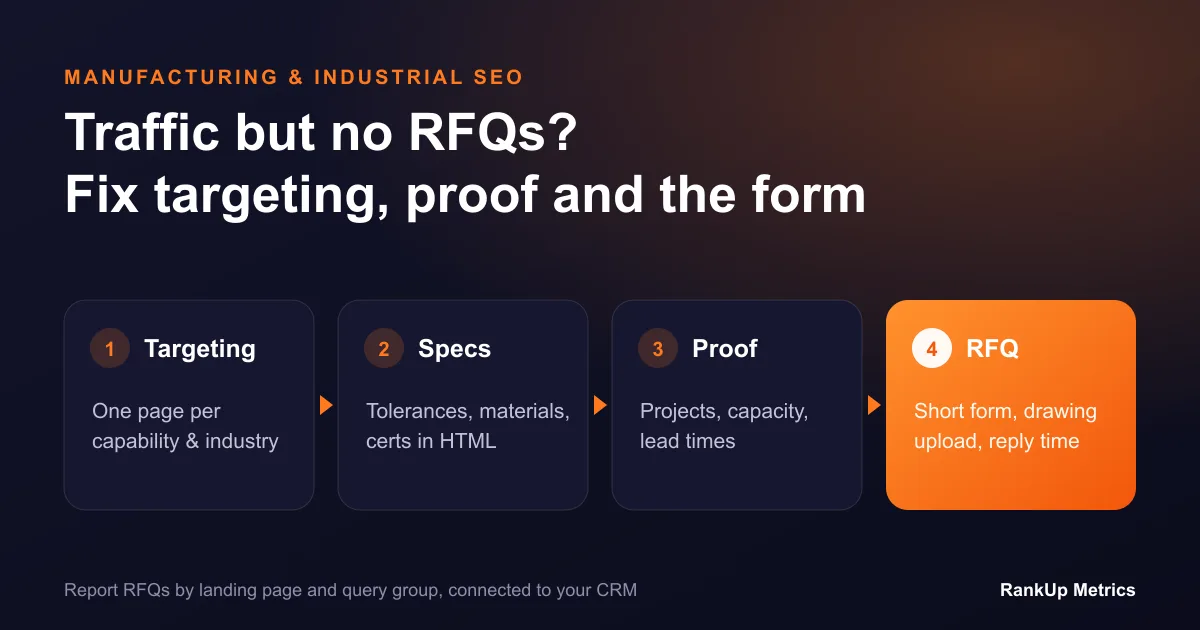
The same principles apply to industrial buyers. Our guide to turning manufacturing traffic into RFQs shows the page elements that make B2B visitors ask for a quote.
Step 6: Structure Campaigns Around Margin
Split campaigns by service line or product with different values and sales cycles, so budgets follow profit rather than volume. Give the most profitable services their own campaigns and budgets, and judge each on cost per qualified opportunity.
Step 7: Report on the Right Numbers
Monthly, report:
- cost per lead, cost per qualified lead and cost per opportunity;
- lead-to-opportunity and opportunity-to-customer rates by campaign;
- pipeline and revenue influenced by Google Ads;
- search terms added as negatives and changes made.
If cost per lead rises but cost per opportunity falls, the account is improving.
A Note on Performance Max
Performance Max can work for B2B lead generation once it has reliable offline conversion data. Without it, it tends to optimise toward cheap, low-quality leads. Start with Search campaigns, build the conversion data, then test Performance Max with qualified-lead goals and brand exclusions.
Next Steps
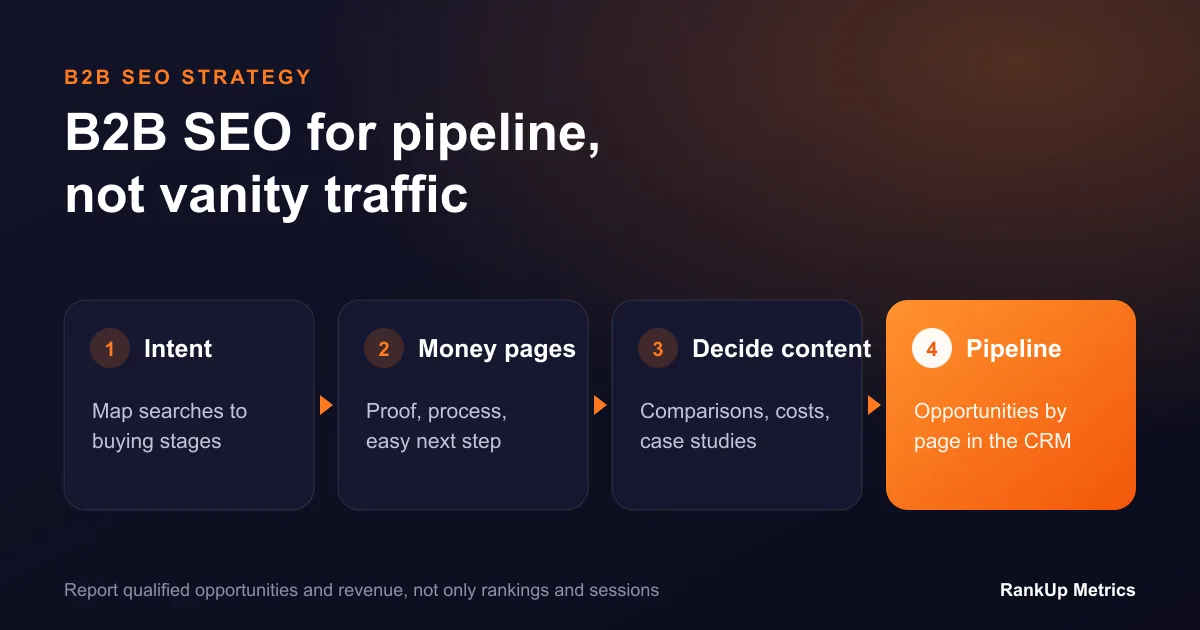
Our PPC and Meta Ads management team sets up offline conversion tracking and CRM-based reporting before optimising bids, so CPA falls for the leads that matter. If you also want organic leads, see our B2B SEO strategy for high-intent pipeline.