
Walk through Little Havana, Doral or Hialeah and you will hear as much Spanish as English. Search behaves the same way. Some customers type "dentist near me", others type "dentista cerca de mí", and many switch depending on the service and who in the family is searching. A Miami business that only ranks in English can miss a large share of its local market.
This guide to bilingual SEO in Miami is for business owners and marketing leads deciding whether to invest in Spanish SEO, and how to do it without doubling costs or creating weak translated pages. It covers when Spanish pages make sense, how to research Spanish keywords, the technical setup, local listings in both languages, and how to report results by language.
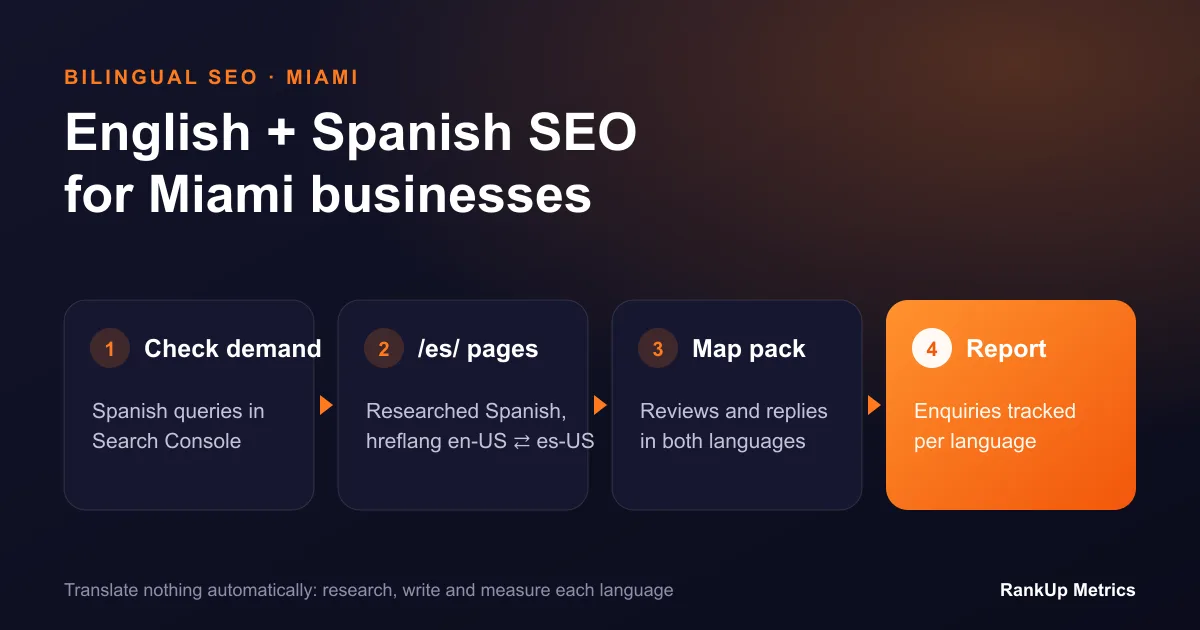
Do You Need Spanish Pages? Check Demand First
Spanish pages are worth building when Spanish-speaking customers search for what you sell and your team can serve them in Spanish. Both conditions matter. A Spanish page that leads to an English-only phone line frustrates the customer it was built for.
Three checks give a quick answer:
- Search Console. Look for Spanish queries that already bring impressions to your English pages. They are a strong signal of unmet demand.
- Your own conversations. Ask your front desk or sales team how many enquiries arrive in Spanish today.
- The search results. Search your main services in Spanish. If competitors rank with thin or machine-translated pages, a well-built Spanish page has room to win.
For many Miami sectors, including healthcare, legal services, real estate, home services and hospitality, the answer is yes.
Research Spanish Keywords, Do Not Translate Them
Translation produces grammatically correct pages that miss what people type. Miami Spanish includes Cuban, Venezuelan, Colombian, Puerto Rican and other influences, and many searchers mix Spanish and English in one query.
A practical process:
- Start from real customer language in calls, chats and reviews written in Spanish.
- Collect phrases from Google autocomplete and "People also ask" in Spanish for Miami and nearby cities.
- Expect mixed queries such as a Spanish phrase plus an English brand or service name, and keep those terms on the page.
- Group phrases by intent and map each group to one page.
- Have a native Spanish speaker who knows South Florida review the wording before publishing.
Queries such as "posicionamiento en buscadores en Miami" and "SEO en Miami" show that even B2B buyers search in Spanish for professional services.
Structure English and Spanish Pages Correctly
The technical setup decides whether Google shows the right language to the right person. Google explains the details in its guide to localized versions of pages.
- Use a separate URL for Spanish, usually a subfolder such as
/es/. Do not swap language on the same URL with cookies or scripts. - Add hreflang in both directions, for example
en-USandes-US, with each page also referencing itself. - Set
lang="es"on Spanish pages and keep canonicals pointing to the Spanish URL, not the English one. - Make the language switcher page-to-page. Someone on your English "roof repair" page should land on the Spanish "reparación de techos" page, not the Spanish homepage.
- Translate metadata. Spanish pages need Spanish title tags, meta descriptions and image alt text.
Win the Map Pack in Both Languages
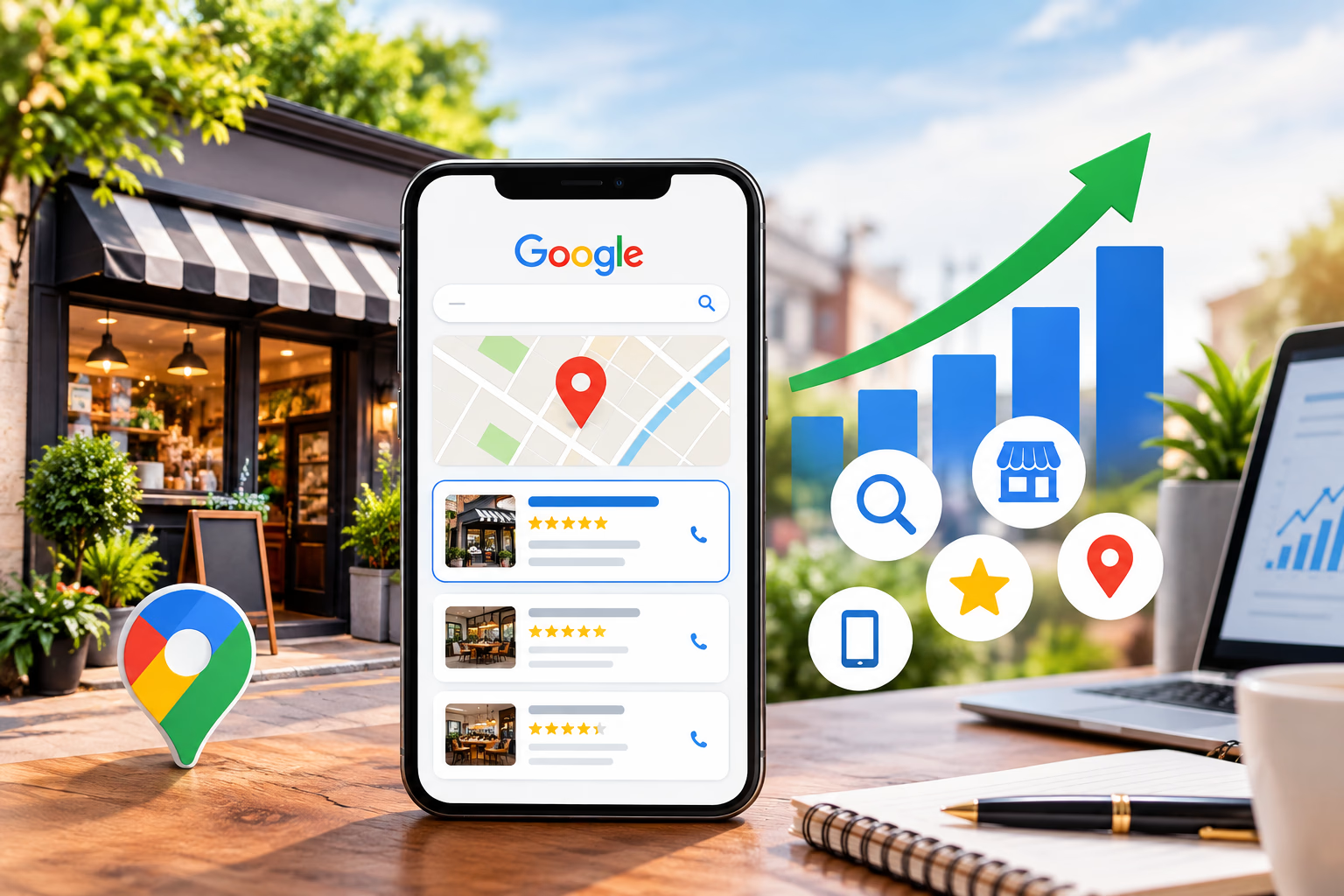
For local services, the map pack often matters more than the organic results. Your Google Business Profile serves both audiences, so:
- describe your services clearly and keep categories accurate
- mention that you serve customers in Spanish where that is true
- ask happy customers for reviews in whichever language they prefer
- reply to each review in the language it was written in
- keep your name, address, phone and hours identical across both website versions and the profile
Spanish reviews also help Spanish-speaking customers trust you before they call.
Measure Results by Language
Bilingual SEO only proves its value if you can see what each language produces. Most reports blend everything into one traffic number, which hides whether the Spanish investment is working.
Set reporting up so you can answer three questions:
- How visible are we in each language? Filter Search Console by page path (
/es/versus the rest) to compare impressions, clicks and positions. - What does each language produce? Track calls, form submissions and WhatsApp clicks from Spanish pages separately, with clear conversion definitions.
- Which keyword groups are moving? Track service and neighbourhood keyword groups in both languages rather than single vanity keywords.
We build these as custom SEO reports for Miami businesses, based on the method in our guide to Search Console and GA4 API reporting.
Choosing a Miami SEO Expert for Bilingual Work
If you hire help, ask direct questions:
- Who writes and reviews the Spanish content, and are they native speakers familiar with South Florida?
- How will you research Spanish demand before building pages?
- How will you report results for each language separately?
- Will I own the Business Profile, Search Console, analytics and content?
- How do you approach AI search in both languages, without promising specific placements?
Avoid anyone who proposes translating every English page automatically, or who guarantees rankings by a date.
Example: A Bilingual Page Plan for a Miami Service Business
Consider a home services company in Miami-Dade offering AC repair, installation and maintenance plans. A practical bilingual plan does not mirror every page. It follows demand:
| Page | English | Spanish | Why |
|---|---|---|---|
| AC repair | Yes | Yes | High demand in both languages, urgent intent |
| AC installation | Yes | Yes | High-value service, customers compare carefully |
| Maintenance plans | Yes | Yes | Recurring revenue, common questions in both languages |
| Commercial HVAC | Yes | Later | Buyers mostly search in English; review after six months |
| Neighbourhood pages | Selected areas | Selected areas | Only where there is real demand and useful local detail |
| Blog guides | Core topics | Top questions only | Start with the questions customers ask most in Spanish |
The Spanish pages are written from Spanish-language customer conversations, link to each other and to their English equivalents, and route calls to Spanish-speaking staff.
Common Bilingual SEO Mistakes in Miami
- Running every English page through automatic translation and publishing the result
- Spanish pages with English title tags and meta descriptions
- A language switcher that drops visitors on the Spanish homepage
- Spanish pages whose contact forms and phone menus only work in English
- Missing or one-way hreflang tags
- Reporting both languages as one number, hiding what Spanish actually produces
- Creating dozens of thin neighbourhood pages in two languages instead of a few useful ones
Frequently Asked Questions About Bilingual SEO in Miami
Will Spanish pages compete with my English pages?
Not when they are set up correctly. Separate URLs, two-way hreflang and language-specific canonicals tell Google they are alternatives for different audiences, not duplicates competing for the same searches.
Should I start with Spanish versions of every page?
No. Start with the services that bring the most revenue and show clear Spanish demand, measure results, and expand from there. A handful of strong Spanish pages beats a full site of weak translations.
How long does it take for Spanish pages to rank in Miami?
Many Spanish searches face less competition than their English equivalents, so well-built pages can gain visibility sooner. Competitive commercial terms still take several months of consistent work.
Do I need separate Google Business Profiles for each language?
No. One accurate profile serves both audiences. Focus on clear service descriptions, reviews in both languages and consistent details across your English and Spanish pages.
Bringing It Together
Bilingual SEO in Miami works when Spanish is treated as its own audience: demand-checked, written in natural local Spanish, set up with clean URLs and hreflang, and measured separately. Done that way, it is one of the most reliable ways for a Miami business to grow local visibility without fighting over the same English keywords as every competitor.
Our Miami SEO agency runs bilingual English and Spanish SEO with reporting per language. Contact us for a free review of your current visibility in both languages.